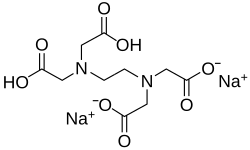
Disodium ethylenediaminetetraacetate (commonly abbreviated as disodium EDTA), like EDTA itself, primarily functions as a powerful metal ion chelating agent. It works much like a “crab’s claw,” firmly gripping various metal ions—such as calcium, magnesium, iron, and copper—to form stable, water-soluble complexes.
Based on this core capability, it has widespread applications across various fields:
Analytical Chemistry and Research
This is its most classic and fundamental application.
Complexometric Titration: In analytical chemistry, it is commonly used to precisely determine the concentration of metal ions such as calcium and magnesium in solutions.
Biochemical Experiments: It serves as a component of buffers for experiments such as cell culture and electrophoresis; it is also used as an enzyme inhibitor, as chelating divalent cations can inhibit the activity of certain metalloproteases.
Metal Masking Agent: In analytical and synthetic processes, it is used to “mask” metal ions that interfere with reactions.
Medicine and Pharmaceuticals
Heavy Metal Detoxification: It binds to harmful heavy metal ions in the body—such as lead and cadmium—forming stable complexes that are then excreted, thereby acting as a detoxifying agent.
Blood Anticoagulant: By chelating calcium ions in the blood, it prevents blood clotting and is a common anticoagulant component in blood collection tubes.
Food Industry (Food Additives)
This is a very important civilian application, primarily serving as a stabilizer, antioxidant, and color preservative.
Functions: It prevents food discoloration, spoilage, and cloudiness caused by metal ions, as well as the oxidative loss of vitamin C.
Applications: According to national standards (GB 2760), it may be used as a stabilizer, antioxidant, and other functions in foods such as jams, pickled vegetables, canned nuts and seeds, compound seasonings, and beverages (excluding packaged drinking water).
Industrial and Household Chemicals
Water Treatment: Used to soften hard water and prevent scaling in boilers or pipes.
Household Products: Added to detergents, liquid soaps, shampoos, and cosmetics to prevent metal ions from affecting product stability and quality.
Other Industrial Applications: Also widely used in the development of color photographic materials, textile printing and dyeing, and the control of synthetic rubber polymerization.
Differences from EDTA (Ethylenediaminetetraacetic Acid)
Solubility: Disodium EDTA is the sodium salt of EDTA; it is soluble in water, whereas EDTA itself is virtually insoluble in water. Therefore, disodium EDTA is more convenient and widely used in aqueous solutions than EDTA.
 BINHAI


Copyright © 2026 by Weifang Binhai Petro-Chem Co., Ltd.