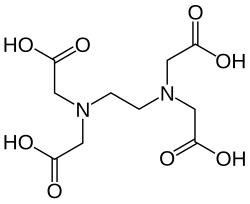
The primary use of ethylenediaminetetraacetic acid (commonly abbreviated as EDTA) is as a powerful metal ion chelating agent. It can firmly bind to various metal ions—such as calcium, magnesium, iron, and copper—much like a “crab’s claws,” forming highly stable water-soluble complexes.
Based on this core capability, it has widespread applications across various fields, primarily in the following areas:
Analytical Chemistry and Laboratories
Complexometric titration: This is one of EDTA’s most classic applications in analytical chemistry and is commonly used to precisely determine the concentration of metal ions in solutions.
Masking agent: It can “hide” metal ions that interfere with reactions, allowing specific chemical reactions to proceed smoothly.
Biochemical Research: Used to eliminate the inhibitory effects of trace heavy metals on enzymes; it is often used to protect biomolecules that are susceptible to metal ions during experiments.
Medicine and Life Sciences
Blood Anticoagulant: By chelating calcium ions in the blood, it prevents blood clotting and is a common additive in blood collection tubes for tests such as complete blood counts.
Heavy Metal Detoxification: It binds to harmful heavy metal ions in the body, such as lead and cadmium, forming stable complexes that are excreted through urine, thereby providing a detoxifying effect.
Industry and Consumer Products
Water Treatment: Used to soften hard water and prevent scaling in equipment such as boilers; it is also used in the treatment of industrial wastewater.
Additives in Consumer Products: Added to cosmetics and detergents to prevent metal ions from affecting product quality and stability.
Other Industrial Applications: It can also be used as a dyeing aid, fiber treatment agent, developing solution for color photographic materials, rubber polymerization initiator, and PVC heat stabilizer, among other applications.
 BINHAI


Copyright © 2026 by Weifang Binhai Petro-Chem Co., Ltd.