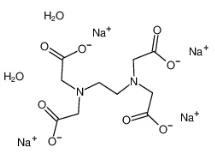
Tetrasodium EDTA Solution (EDTA-4Na Solution) is widely used in water treatment, industrial cleaning, detergents, textile printing and dyeing, papermaking, electroplating, personal care products, and agriculture. In water treatment and industrial formulations, it is used to chelate and stabilize metal ions; in detergents and cleaning products, it helps soften water and improve formulation stability; and in industries such as textiles and papermaking, it reduces the adverse effects of metal ions on production processes.
| Chemical Name | Tetrasodium Ethylenediaminetetraacetate Solution |
| Chemical Formula | C₁₀H₁₂N₂Na₄O₈ |
| CAS | 64-02-8 |
| Appearance | White crystalline powder / White crystals |
| Melting point | >300°C |
| Boiling point | 614.2°C |
| Density(ρ20), g/cm³ | 0.71 g/cm³ |
| Molecular Weight | 380.17 |
| Solubility | Easily soluble in water |
Tetrasodium ethylenediaminetetraacetate (EDTA) aqueous solution is a highly effective water-soluble chelating agent capable of forming stable complexes with a variety of metal ions. It is widely used in water treatment, industrial cleaning, detergents, textile printing and dyeing, papermaking, electroplating, personal care products, and agriculture. In its liquid form, it is convenient to use, easy to measure, simple to add, and mixes readily with aqueous systems.

Storage Conditions: Store in a cool, dry, well-ventilated area, away from direct sunlight.
Container Requirements: Keep the container sealed; use a corrosion-resistant container suitable for storing aqueous solutions.
Temperature: It is recommended to control the storage temperature according to the supplier’s SDS requirements and avoid high temperatures and freezing.
Avoid Contact: Avoid contact with strong acids, strong oxidizing agents, and incompatible substances.
Prevent Contamination: Seal the container promptly after use to prevent dust, impurities, or other chemicals from entering.
Long-Term Storage: Periodically check the container’s seal and monitor the product for changes in appearance, such as color and clarity.
Handling: When handling, avoid container breakage, leakage, and violent impacts.
We Founded in 2005
We focuses on the research and development, production and sales of fine chemicals with broad market prospects
Our clients are located in more than 10 countries and regions around the world
 BINHAI


Copyright © 2026 by Weifang Binhai Petro-Chem Co., Ltd.


